Definox Structures Its Commitment Around Sustainable Mobility
As part of its CSR strategy, Definox has made sustainable mobility a key pillar of its environmental transition. Located in an industrial area of Clisson where car use remains predominant, the company has taken action to encourage and facilitate daily cycling among its employees. Discover the origins of this CSR initiative, the improvements made on site, the evolution of employees’ commuting habits, and the company’s future plans to further promote sustainable mobility.
From Observation to Certification: The Origins of the Initiative
Located in the Tabari industrial park, Definox was faced with a clear reality: the majority of its employees commute to work by car.
To encourage a shift in commuting habits, the company has been implementing concrete actions for several years to promote cycling, notably through the national “Objectif Employeur Pro-Vélo” (OEPV) program.
Co-created by the French Federation of Bicycle Users (FUB) and ADEME, this scheme helps companies develop and structure their active mobility policies.
“The goal of this initiative is to promote the use of bicycles within the company, both for commuting and for business-related travel,” explains Charlotte, QSE/CSR Project Manager and the driving force behind the project.
This initiative is fully aligned with Definox’s overall CSR approach. By developing sustainable mobility solutions, the company addresses three key objectives:
- Environmental: reducing the carbon footprint associated with individual and collective transportation.
- Economic: supporting employees’ purchasing power through concrete measures. The company’s Cycling Mileage Allowance (IKV) has been doubled, increasing the tax-exempt annual limit from €300 to €600.
- Social: promoting well-being and health through physical activity while strengthening team cohesion.
“We have implemented a roadmap called Vélotaf, which helps us foster a culture of sustainable mobility, particularly through cycling,” explains Charlotte.
Concrete Actions on the Ground
On site, the roadmap has been translated into a comprehensive range of facilities and services designed to support employees in their everyday use of bicycles.
The existing bike shelter has been upgraded with protective foam on the racks, improved lighting, and safety signage. Definox has also installed 16 individual lockers, a bicycle pump station, a toolbox, and dedicated visitor bike racks. In addition, the company provides a fleet of bicycles, along with helmets, locks, lights, and baskets for employees.
“Having a secure bike shelter is really convenient,” says Rémi, Research and Development Technician.
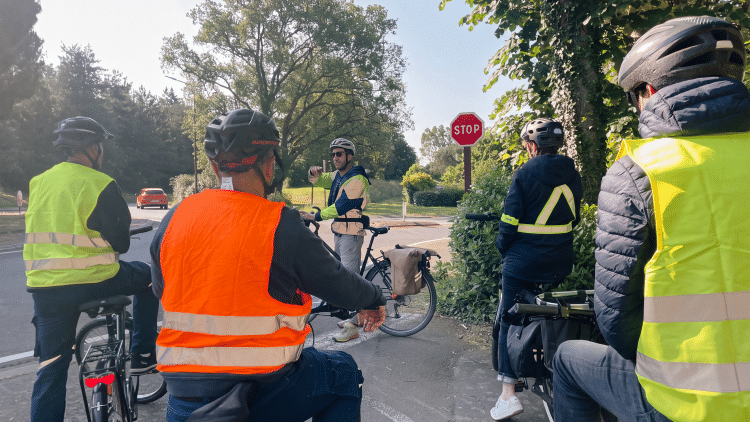
To educate and raise awareness, Definox has introduced a Cyclist’s Guide and organized practical workshops covering road safety, electric bike trials, and collaborative bicycle maintenance.
The initiative is further supported by engaging events such as “Lunch Bike Rides”, the national “Mai à Vélo” (Bike Month) challenge, and the internal podcast “To the Rhythm of Bicycle Commuters”, created to share employees’ experiences and feedback.
“We try to connect with local and national initiatives in order to create links and communicate more effectively about this topic,” explains Charlotte.
Growing Enthusiasm and Changing Habits
The efforts undertaken are now delivering positive results and driving changes in commuting habits.
The number of regular bicycle commuters has more than tripled, rising from three users when the initiative was launched to around ten employees cycling to work every day.
“The bicycle fleet is currently used on a daily basis by two apprentices to travel to Clisson train station,” adds Charlotte.
The bike shelter continues to see increasing usage, while the company’s bicycle fleet is used several times a week. Beyond the numbers, the initiative’s success is reflected in the growing enthusiasm of employees and the emergence of a genuine cycling community within the company.
“I couldn’t do without my bike. It’s truly a source of well-being,” says Pascal, Prototype Technician at Definox.
Future Outlook
Rooted in a long-term vision, this project will continue to grow over the coming years.
By 2027, Definox’s CSR strategy aims to extend this momentum across the entire Tabari industrial area by creating synergies with neighboring companies.
The initiative will also gradually integrate other sustainable transportation solutions, such as carpooling and public transport, to provide mobility options for as many employees as possible.
“We have obtained this certification for three years. Looking ahead, why not aim for the Gold level?” concludes Charlotte.